By: Lorelai Klinger & Jennifer Martin, researched by Hal Dittbrenner
Scientific Name: Helarctos Malayanus
Classification:
- Kingdom: Animalia
- Class: Mammalia
- Family: Ursidae
Population Number: less than 1,000
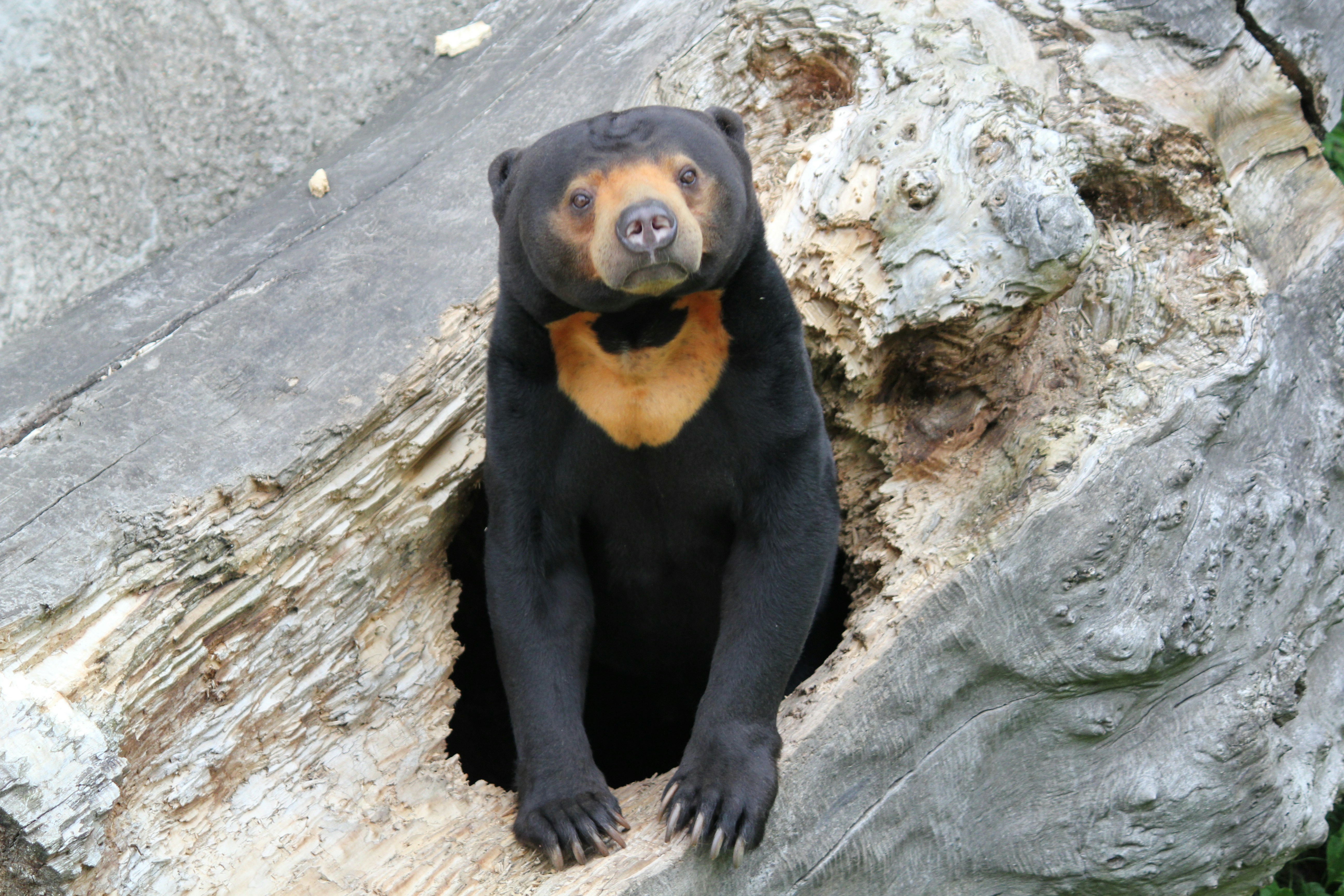
Sun bears, also known as “basindo nan tenggil” in the Malay language, meaning “he who likes to sit high”, are native to tropical forests of southeast Asia. These omnivores are the smallest bear species, and one of the most recognizable. They get their name from the white or cream-colored crescent marking on its chest, which looks like the rising or setting sun. These markings are individually unique— like fingerprints.
Sun bears are fascinating creatures. They have remarkably long tongues, which they use to extract honey and insects from trees and hives. They don’t hibernate like cold-weather bears, nor are they the only bear species in their habitats. Sun bears, black bears, and sloth bears have been found in eastern India, which makes this area the only place where those three species of bears are known to coexist.
Sadly, sun bears are threatened in their natural habitat because they live in tree branches, making them vulnerable to deforestation. The International Union for the Conservation of Nature (IUCN), listed this species as vulnerable, meaning that sun bears are at high risk of extinction. Heavy deforestation, illegal hunting, and the illegal wildlife trade have diminished their numbers significantly. They are also harmed in conflicts with humans when they enter farmlands, plantations, and orchards. The global population is estimated to have declined by 35% since the 1990s.
For more information on sun bears, check out our sources:
Leave a Reply